Maureen Chatfield
MAUREEN CHATFIELD is a contemporary American artist based in New Jersey. Painting since her childhood in New York, Chatfield studied at the Art Students League, the Pennsylvania Academy of the Fine Arts, Fashion Institute of Technology, and Hunter College. She now instructs the Modern Landscape at Hunterdon Art Museum. Chatfield works between three distinct bodies: the modern landscape; the semi-representational, or transitional; and pure abstraction.
Over the winter we sat down with Maureen to speak about her painting practice: the trajectory of her career from her formative, childhood lessons in color theory on; her studio habits; and her deep love of abstraction.
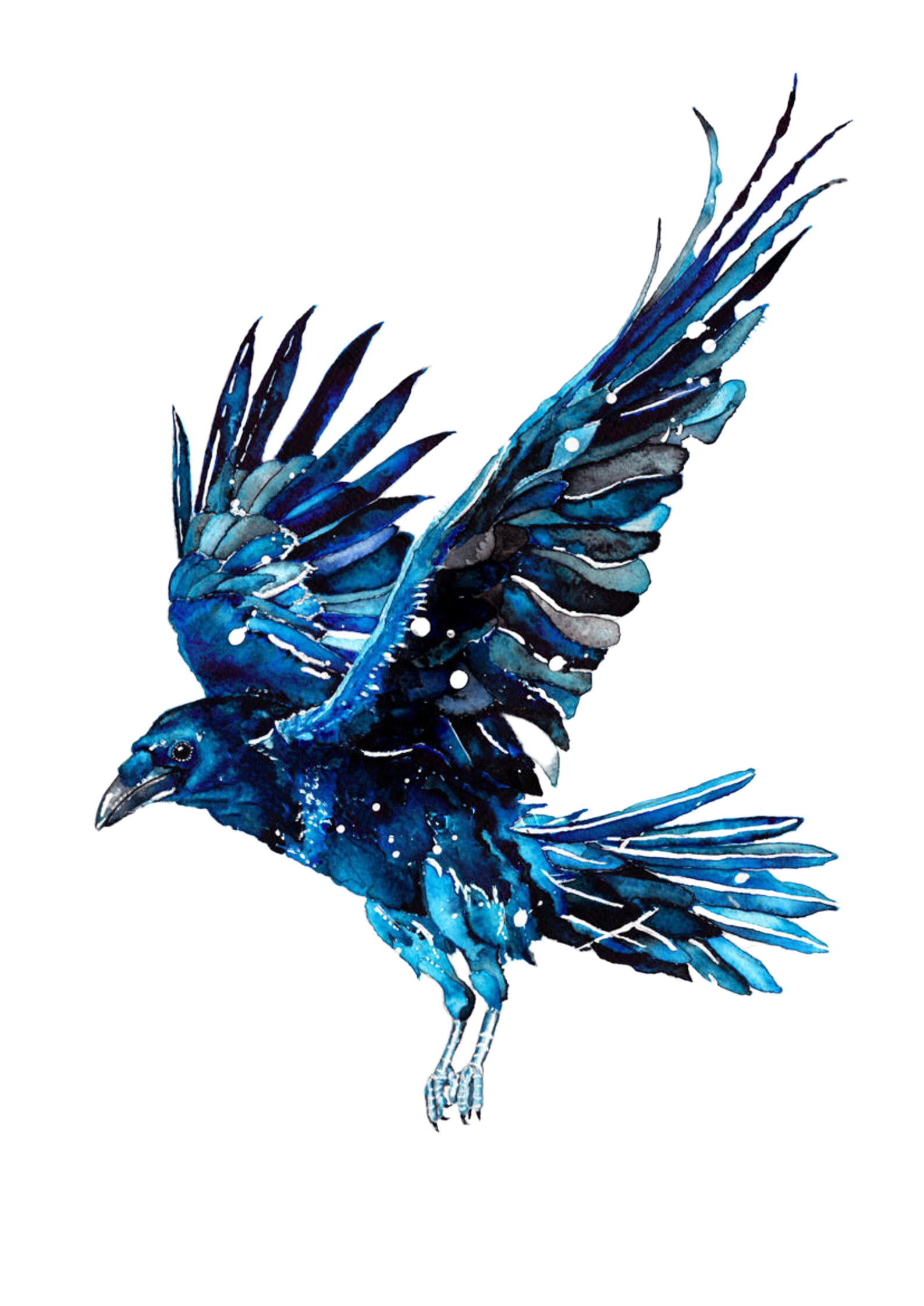
BLUE RAVEN GALLERY
Hi Maureen, thank you so much for speaking with me today. As an entry point into our conversation, could you distill how you think about your current creative practice?
MAUREEN CHATFIELD
I think I'm tripolar. I teach the modern landscape at a museum—it's very minimalist, we don't paint leaves and twigs, but I do have that part of me that I dive into every week. And then I have the semi-representational, I call it transitional, where I'll do something that has some root in landscape. Maybe it has a horizon line, or maybe it was a landscape and I got bored with it, and so I deconstructed it. Then there's the other part, the part I really, really love. And that's abstraction, and there's no thought behind that. That's the crazy thing—I can never repeat what I do, it just doesn't happen. You try, and it's flat.
Maureen Chatfield
Wild Thing
Oil on Canvas, 36" x 36"
37.5" x 37.5" x 3" Framed
BRG
How do you approach your abstract work?
MC
The abstracts just come out. They’re never planned. But what I do know is the energy that creates them almost always comes out later in the day, or in the evening when I’ve done all my representational work or organizational stuff—phone calls, whatever—stuff that needs to get done. Then I can let loose and play. I like upbeat, rhythmic music that puts me in a carefree place where there is no thought—no regard for outcome!
There are two general approaches to my abstract work. One is bold, the other more exploratory, gentler. With the bold, I’ll have an affinity to a color—I’m really drawn to chartreuse lately—so I’ll lay in that color, taking up the majority of the space. Then I’ll build around it, chop into it . . . layer over it all at a rapid speed until a kind of tension of emotional presence emerges.
The other way is more exploratory, gentler. I may do some crazy line work and scribbles, then go back in and meander.
Maureen Chatfield
Hoffman Barn
Oil on Canvas, 30" x 40"
31.5" x 41.5" x 3"
BRG
Maureen, you’ve spoken before about how painters often arrive at abstraction in a meaningful way later in their careers, after they’ve mastered more representational forms of painting. Listening to you describe your studio routine, it almost feels like a miniature of that journey, with the abstracts only arriving late in the day, after you’ve done your linear thinking. Do you feel like there’s a correlation there, between your studio rhythm and the trajectory of your career?
MC
Very definitely. My early work is based around technique, then interpretation, and lastly emotional expression where what comes out is what’s inside. No point of reference, just raw energy reflecting my emotional state.
I received oil painting lessons at fourteen. My teacher wouldn't let me paint until we did color theory and I could copy any color he’d point to. It’s a blessing to get that that kind of knowledge early because it's organic. It’s in your bones, and it stays there, and it grows.
When I was first in New York showing my work, people gave me a lot of grief. They went, ‘You’re here, you’re there, well, who are? You don't have a thumbprint.’ And I said, ‘I’m all those people.’ That stuff just comes out of me, and I transition quickly. I’ve done it all: photorealism, cubism. Then I went freer, softer and looser . . . then realism, in a general way. So I’ve done it all, and really, what’s left? If you face a blank canvas with nothing to copy, no inspiration, what's inside? That's scary. The possibilities are infinite; there are no restrictions. Someone’s not saying, ‘My room is blue’—you have no limits. And that's very scary. Once you fill a blank canvas, you've expanded your creative energy. It will never go back into the bottle. You are now capable of doing that, and it's really a cool feeling. If you can get to that place where you're not thinking, you don't care what the outcome is, you just want to play—you feel that creative, crazy energy—then you attack. But once you start thinking about the painting, put the brush down. Put it down. Because that's not where that creative process lives. It lives beyond thought, beyond organization. It really does.
Maureen Chatfield
Around the Bend
Oil on Canvas, 30" x 40"
31.5" x 41.5" x 2.5" Framed
BRG
I understand Sargent is one of your influences. You’ve also spoken about Manet’s palette, and Gorky’s playfulness. Are there other artists that show up for you as big influences in the work that you're making today?
MC
Sargent is like my Frank Sinatra. He is the ultimate painter. When you look at his economy of stroke, nobody has mastered that like he did. You look closely at the painting, there's nothing there. When I started in my period of abstractions, I fell in love with Diebenkorn. I had to put Diebenkorn aside because I loved him, but you don't want to copy anyone.
Every painter—no, I can’t generalize—a lot of very accomplished painters want the challenge of doing abstract work. That first group of abstract paintings I did, my clients would come in they go, ‘What, are you on drugs? I don't like that’, and I’d run back and do another. Finally, I got a group of paintings together, and I had one client come in and he said, ‘What is it?’ I said, ‘What do you get out of it? Forget what I got out of it. What do you see? If you don't see anything, how does it make you feel?’
He said, ‘Well, it's kind of soothing. It's pretty tranquil, it's kind of ethereal.’ It was called Waiting for Heaven—it was only one color, ultramarine. Different shades of ultramarine, different intensities. And I stopped making excuses for my abstracts, and I stopped trying to tell people what it was, because it didn't matter. This is the reason I love abstraction: because it demands participation. Even if the viewer is just trying to find something in it, because it's new to them and they're trying to understand it, or if they already know abstract work—they like abstraction, they have a feeling for it, and they're totally mesmerized—either way, they're engaged.
BRG
With work like this, you’re almost forcing your viewer to take a step closer, and asking them to collaborate with what’s in front of them. You have to be curious when you look at an abstract work— it's not going to reveal itself to you immediately.
MC
Exactly. And I love that. Abstract work is the ultimate goal after you've done everything. Abstract work needs to have composition beneath it. You need to know how to break up space; you need to know how to create tension with negative space.
"THIS IS THE REASON I LOVE ABSTRACTION: BECAUSE IT DEMANDS PARTICIPATION. EVEN IF THE VIEWER IS JUST TRYING TO FIND SOMETHING IN IT, BECAUSE IT'S NEW TO THEM AND THEY'RE TRYING TO UNDERSTAND IT, OR THEY ALREADY KNOW ABOUT ABSTRACT WORK—THEY LIKE ABSTRACTION, THEY HAVE A FEELING FOR IT, AND THEY'RE TOTALLY MESMERIZED—EITHER WAY, THEY'RE ENGAGED."
Maureen Chatfield
Lost in Venice
Oil on Canvas, 40" x 30"
41.5" x 31.5" x 3" Framed
BRG
In addition to your abstracts and landscapes, you also work narratively—I’m thinking of the Family Narrative series. What is the story behind that work?
MC
I have a raw side, the Basquiat side, and that's the series called Family Narrative. They used to be called Out of My Mind because they were cathartic. They were not painted to sell at all. I did not have happy childhood. I took a lot of workshops when I was in my twenties, and everybody has the family story. If you had a tumultuous childhood, as mine was, then you have stories. And the more you can be free and tell them, and not hide them, the lighter they get. So that's why I thought I’m going to do the visual: I’m going to paint them, and I never have to revisit it, because I can look back and make people laugh. And it's just brilliant for me, it's wonderful. I’ve realized part of who I am is I enjoy making people laugh.
BRG
Your artist statement talks about the sustained inquiry into structure and memory, and the invisible architectures that organize the human experience. Can you touch more on the role that nostalgia and time play in your works? How does that filter into your abstractions and your landscapes?
MC
When I started with my abstractions, they really were about deconstruction first. It's easier to take something that you've done because it hopefully has some architecture—some construction, composition—and destroy it. And break it up, and see where you can push the bounds, make it disappear . . . but you're still using the underlying structure as the root. And so I think it's a very valuable tool. Plus, I love architecture. I struggled with that—art teacher, architect?
Maureen Chatfield
Three Trees
Oil on Canvas, 12" x 12"
14" x 14" x 3" Framed
Maureen Chatfield
Holmstead Barn
Oil on Canvas, 12" x 12"
14" x 14" x 3" Framed
BRG
I see that deconstructed world in your abstract pieces through the way that you are paying attention to the edges and lines. There's something very tangible there.
MC
I'm so glad that you talk about that, because right now I have an advanced class. You can't get in unless I see your portfolio, and some of these people have been with me ten years. And just in the last couple of years, they're finally at a stage where I can say—it's all about the edges. Once you get composition down, now you really need to know how to break this apart. Everything I do is intentional. Everything. If it's blurry, intentional. If it's a sharp edge—everything I do.
BRG
You have spoken today on how your work flows best when you are not thinking. What are the other conditions that allow you to paint?
MC
I don't paint when I'm upset or agitated. One thing I now know about painting is when you start doing lots of jagged points, it's anger. At least in my work. So I avoid even rooftops, I don't love points. When I am upset or I'm very tired—frustrated maybe, or there's too much going on—I feel overwhelmed. I don't run to the studio and get happy. If I'm not happy, I don't have the energy. It doesn't draw me. And so when people come into my studio, they go, ‘Wow, the energy in here is pretty magical’. That makes me happy. Painting is my calling. It's my calling.
BRG
Can you speak on the Fuck Yeah series?
MC
Right now, it is so timely. If you've noticed on TV series, every other word from everybody is, ‘fuck you, fuck you’. It's crazy how much it's being used now. Bookstores have cards. Everybody. But what happened for me was COVID. I had a great time—I didn't want to tell anybody that, because a lot of people were suffering, but I got to paint more with fewer distractions. I live out in the wilderness, so I wasn't locked in anywhere. But it was a pretty fucked up situation, and that's how it started.
Maureen Chatfield
Coastline
Oil on Canvas, 30" x 48"
31.5" x 49.5" x 3" Framed
BRG
Maureen, thank you so much for your time and generosity today. I’ve got one last question for you, to wrap us up. If you were to find yourself at a dinner party populated by artists living in dead, who would you like to have seated next to you? And is there something you would want to ask them or say to them?
MC
Wow, that's a great question. No one's ever asked that before. Mark Rothko. I'd love to know how he came to have the courage to do so little. I mean, his work was so significant, but think about when he did it. Nobody was doing that. So Rothko on one side, and maybe Gorky. When I read about Gorky, he died close to when I was born. So I wonder if I'm his incarnate. You know, he left and I came out. He was very playful. I know I'm very playful, and I would love to experience his energy, since I think I am part of him. He would be a fun dinner partner.
Maureen Chatfield
Between Thoughts
Oil on Canvas, 24" x 30"
25.5" x 31.5" x 3" Framed
MAUREEN CHATFIELD is a contemporary American artist based in New Jersey, represented by Blue Raven Gallery.
MORGANNE ELKINS is a painter and writer from Midcoast Maine. She serves as Blue Raven Gallery's editor and artist liaison.